The Anatomy of an Outbreak:
How Art Movements are Born
For centuries, the high arts were guarded like occult secrets. Disciplines such as typography, sculpture, and classical painting were the exclusive domain of a protected elite—experts who held the keys to the “sacred” guilds. To be a creator was to undergo decades of grueling apprenticeship, often hidden from the public eye. Knowledge was a bottleneck, and access was the ultimate currency.
However, the timeline of human communication has reached a startling inflection point. While we look back on 500 years of printing and formal artistic history, the most significant discoveries and shifts in accessibility have occurred in just the last fifty years. The advent of digital technology and the affordability of the personal computer have dismantled the guild walls, creating a “digital paradise” where the tools of production are in the hands of the many, not the few.
The Rise of the Intuitive Creator
This shift has opened a massive door to personal talent that was previously barred by the lack of formal credentials. We are currently witnessing a unique moment in history where individuals without a single day of formal training are showcasing extraordinary talents—abilities that often bypass or exceed those held by individuals with master’s degrees.
In art, perhaps more than in any other human endeavor, talent weighs more than any degree. The digital age has proven that aesthetic intuition and raw creative passion cannot be manufactured by an institution; they can only be discovered and refined.
The Myth of Spontaneous Generation
Despite this democratization, there remains a romantic myth that art movements appear magically—like mushrooms after rain—spontaneously emerging from the soil of culture without a clear origin. In reality, art movements are not biological accidents; they are calculated outbreaks. They do not simply “happen”; they are started by individuals with the audacity to frame a new reality.
As a matter of theory, the creation of an art movement follows a logical, albeit defiant, progression:
-
Identification of a Void: Spotting a silence in the cultural noise that needs to be filled.
-
Synthesis of a Manifesto: Codifying the “why” and “how” into a set of principles.
-
Dissemination: Pushing the work into the public sphere to find its kin.
Crucially, there is a prevailing elitist myth that such a feat requires massive financial backing or a sprawling ensemble. In truth, an art movement requires only two non-negotiable assets: Intent and Passion. In the realm of the avant-garde, “the ensemble” is not necessarily a hundred people in a hall; it is a collective of intent—even if that collective starts with just two people ready to execute a vision.
The Architect: Mauricio Reyes
While the barrier to entry has vanished, a true art movement requires more than just raw, unbridled output. To prevent a movement from dissolving into aimless noise, it must be moderated and controlled; it requires a steadfast commitment to an idea to ensure it doesn’t just flicker and die.
This is where the architecture of a movement becomes essential. Just as Mauricio Reyes spent decades studying the “occult” complexities of electroacoustic and concrete music, a movement needs a framework to channel the sudden influx of democratic talent. The genesis of Fluxus Sonus follows this classic trajectory of inception. It began with a period of intense, solitary absorption—Reyes’ first phase was not spent seeking a “brand,” but rather in the rigorous study and understanding of electroacoustic, concrete, and electronic music in all its forms.
This foundation led to action. Reyes transitioned from a student of the craft to a catalyst, producing albums for other artists before eventually publishing his own complex studies and works. His momentum was built through high-level collaboration on significant projects, such as 9 Beet Stretch 2.0, Meta Tones, The Sone of Total Proximity II, and Organ Needles alongside Adi Newton. These were not merely recordings; they were the field tests for a larger ideology.
Demystifying the “Sacred”
A common misconception is that art movements are sacred, untouchable monoliths that only exist in history books. This is a fallacy that stifles innovation. Just like a business, a scientific theory, or a political shift, an art movement is born from a singular idea and can be initiated by anyone with the requisite willpower.
The path taken by Mauricio Reyes mirrors the systematic steps of creation perfectly:
-
Preparation (Study): Decades of electroacoustic research.
-
Agitation (The Spark): The decision that a new avenue was required.
-
Collaboration (The Ensemble): Connecting with peers and mentors like Adi Newton to solidify the aesthetic.
-
Codification (The Launch): Giving the movement a name and a mandate: Fluxus Sonus.
Fluxus Sonus: Freedom Through Parameters
Fluxus Sonus embraces the digital paradise, but it does so with a distinct set of principles. We believe that while everyone can be a creator, a movement survives only when its ideas stay within certain parameters.
This commitment is not a restriction of creativity; rather, it is a tightening of the lens. By establishing a “root node” of ideas and sticking to a defined set of creative parameters, Fluxus Sonus ensures that the work remains cohesive, impactful, and intellectually grounded. We are not interested in a chaotic sprawl, but in a focused mutation of the Fluxus spirit—one that welcomes the extraordinary talents of the self-taught while anchoring them in the rigorous tradition of electroacoustic excellence.
In this new era, Fluxus Sonus acts as the vehicle that takes the raw, democratic fire of modern talent and refines it into a lasting cultural legacy.
The Creative Oversight: Newton and the Mutation
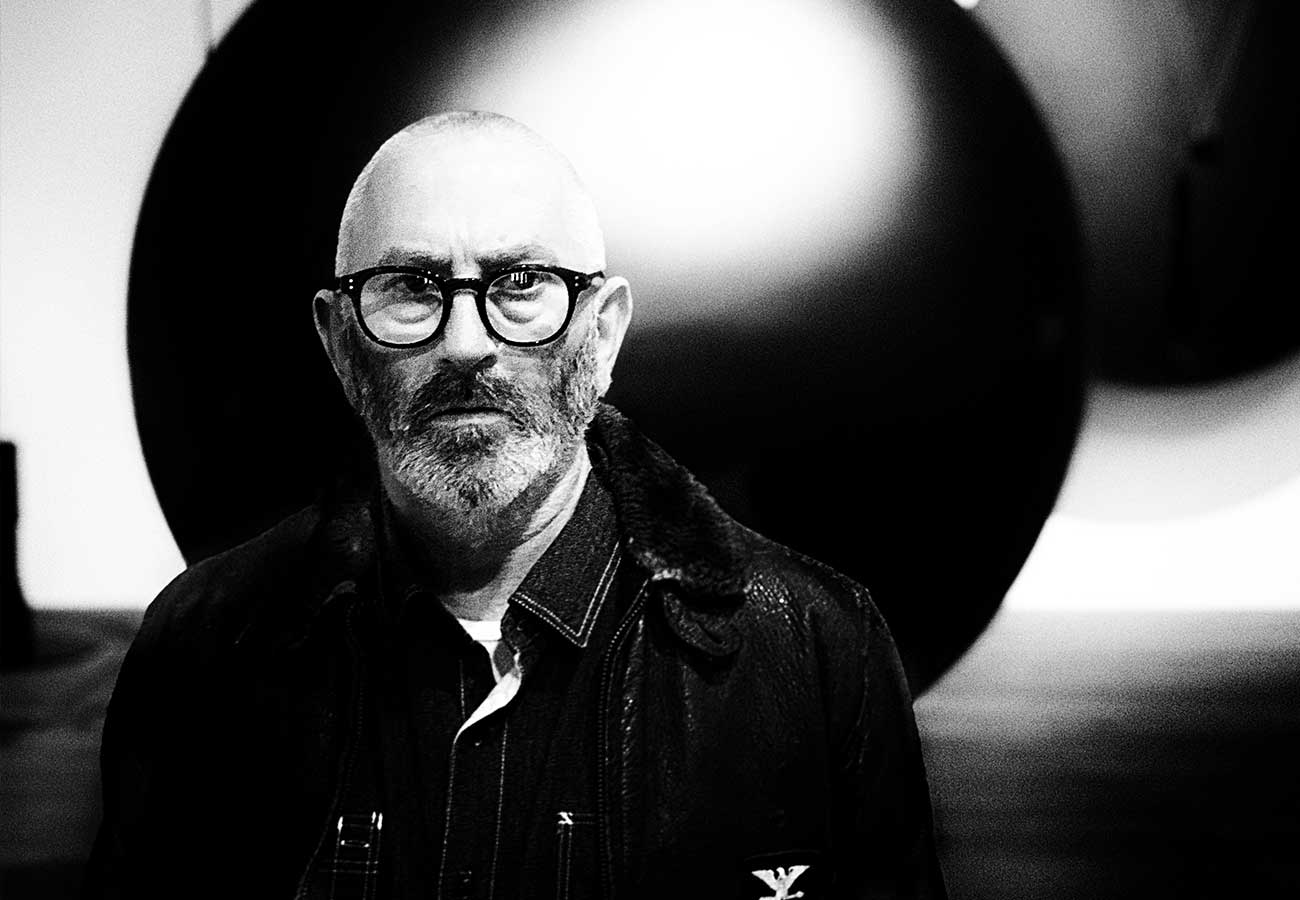
To ensure the movement possessed the necessary creative gravity, Reyes reached out to Adi Newton to oversee the project’s creative aspects. Newton’s history with projects like The Anti Group (TAGC) and Psychophysicist provided a spiritual blueprint for research-driven art.
However, while those prior groups were essential, specialized research projects, Fluxus Sonus is designed on a much larger scale. It is not a nostalgic return to the 1960s “Fluxus” movement; it is a mutation. It takes that original creative spirit—the blurred lines between art and life—and adapts it for a 21st-century world with entirely different technological and social preconditions.
Conclusion: The New Avenue
Fluxus Sonus is proof that the era of the “Movement” is not over. By combining Reyes’ structural foundations and electroacoustic mastery with Newton’s legacy of research-driven art, a new avenue of expression has been opened. It is a reminder that art is not something that happens to us—it is something we initiate.
“Movement is not a reaction to history; it is the act of writing it in real-time.”

Welcome to the Sonic Vault, the centralized archival infrastructure of Fluxus Sonus. This evolving databank aggregates structured and unstructured materials, including documentation, images, texts, metadata, and biographical records of all participating artists. Designed as a living system rather than a static archive, the Sonic Vault supports continuous expansion, versioning, and contextual linkage, ensuring the long-term preservation, traceability, and integrity of Fluxus Sonus works, practices, and participants.
DAN
Databank Access Nodes