

_Marshall Mc Luhan]

The Estate of Marshall McLuhan has agreed to work with Telekinett to feature the visionary media predictions of this extraordinary wordsmith, whose ideas remain more relevant now than ever. His inclusion is vital, because Fluxus Sonus aims to create a shift in how art itself is perceived — not as object, image, or performance, but as an environmental force that reshapes human awareness.
McLuhan’s life work centered on what he called the training of perception. Though trained as a scholar of literature at Cambridge, he moved beyond texts to examine the environments created by media themselves. A formative shock early in his teaching career made him realize that generational change was not simply cultural, but perceptual — driven by new ways of learning shaped by technology. From that point forward, he turned toward media as the hidden architecture of consciousness.
His central claim was radical: media are extensions of the human body and nervous system. Each technological shift reorganizes the balance among the senses — what he described as changes in the ratio of the senses. The alphabet intensified sight over hearing; electric media reawakened simultaneity, immersion, and acoustic space. These shifts do not just affect communication — they restructure how reality itself is experienced.
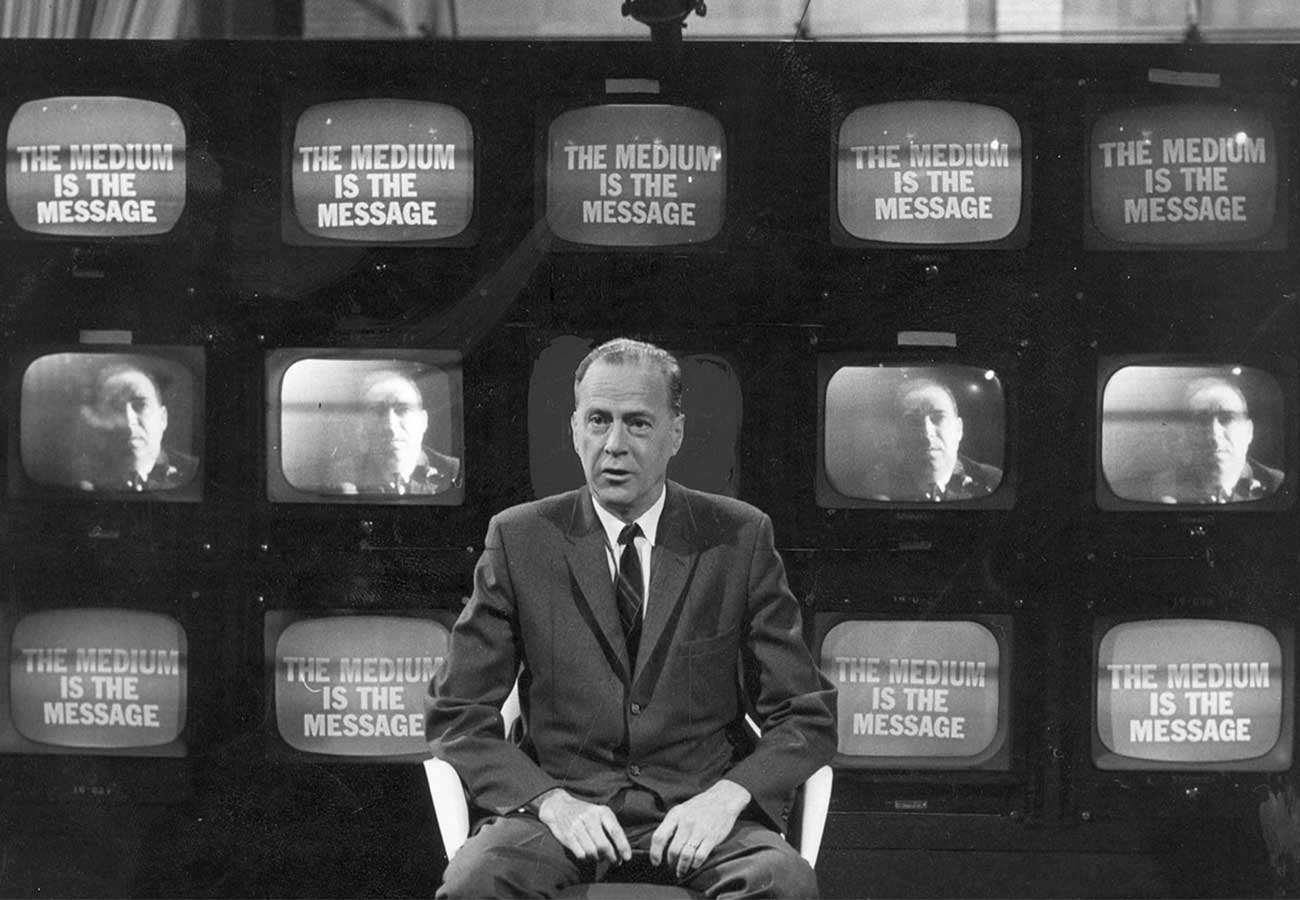
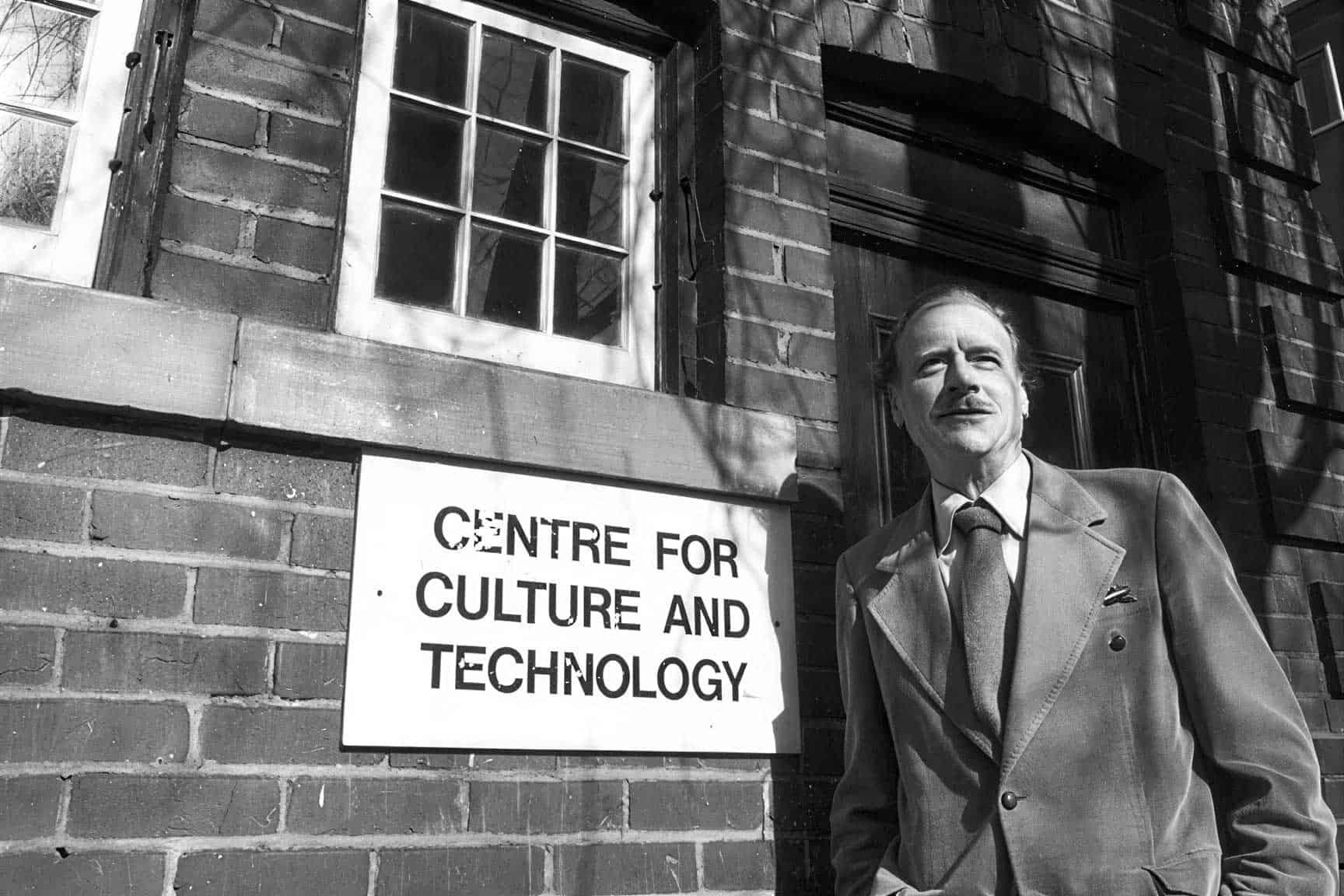
Long before the digital age, McLuhan foresaw global connectivity, sensory saturation, and the collapse of boundaries between individual and environment — what he described as the emerging global village. In works like Understanding Media and The Medium is the Massage, and through collaborations with artists and designers, he demonstrated that media environments shape us more powerfully than the content they carry. At the Centre for Culture and Technology in Toronto, his work bridged art, theory, technology, and lived experience.
This is precisely where Fluxus Sonus operates. By placing sound — vibration, frequency, signal — at the center, Fluxus Sonus treats art as a perceptual condition rather than a visual artifact. McLuhan showed that environments, not images, shape consciousness. Fluxus Sonus continues that trajectory through sonic space, where listening becomes the new site of awareness and art functions as a restructuring of the sensorium.
His presence grounds Fluxus Sonus in a lineage of radical media thought. McLuhan did not treat media as tools, but as forces that reprogram perception. Fluxus Sonus applies that insight artistically: sound becomes the medium that reorganizes the senses and dissolves the boundary between artwork and environment. In this way, McLuhan is not a historical reference — he is a conceptual foundation for the movement’s evolution.
Artist Gallery
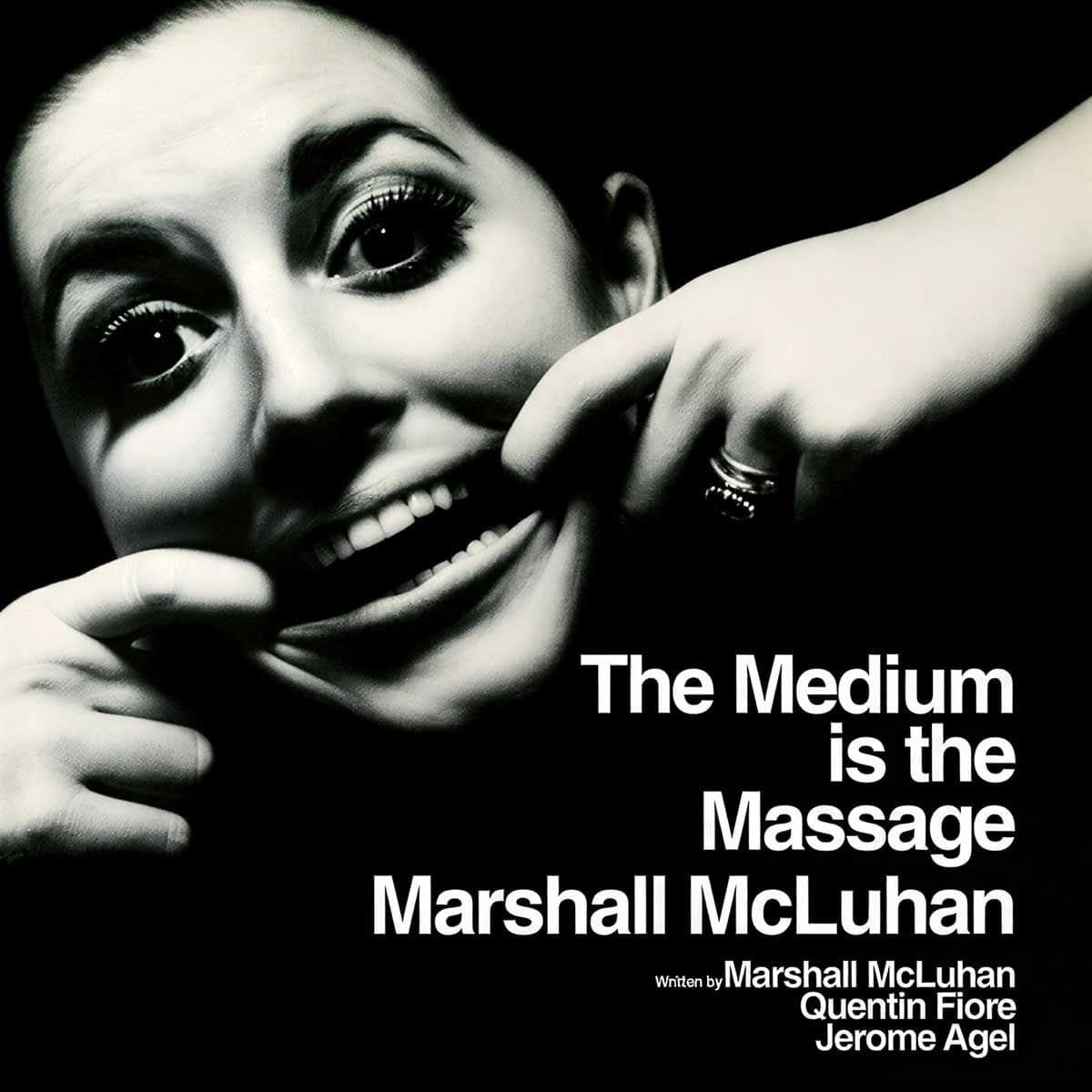
The Medium Is The Massage:
Marshall McLuhan – Columbia Records 1967
Audiography
Marshall McLuhan
The Medium Is The Massage: With Marshall McLuhan
Genre: Electronic, Jazz, Non-Music
Style: Bop, Field Recording, Musique Concrète, Radioplay, Experimental
Year: 1967
Format: Vinyl, 12″, 33 RPM, Promo, Stereo
Marshall McLuhan – The Medium Is The Massage
Label: Columbia – none
Format: Vinyl, LP, Album, Stereo

DAN
Databank Access Nodes
